Coding agents
Best AI Coding Agents: Compare Task Fit, Cost, Autonomy and Security
Coding agents now range from interactive terminal assistants to isolated cloud workers that can change repositories, run tests, and handle longer software-engineering tasks. Comparing them requires more than a coding benchmark — execution environment, security boundaries, review workflow, and cost model all affect which agent fits a given team.
How to Compare AI Coding Agents
A useful comparison framework evaluates coding agents across the dimensions that matter for production use, not just benchmark scores.
| Dimension | Key question | Range of approaches |
|---|---|---|
| Execution environment | Where does the agent run? | Local terminal ↔ Cloud sandbox ↔ Dedicated agent platform |
| Repository scope | How many files can it read and modify? | Single file ↔ Full repo with multi-file edits |
| Build and test execution | Can it run tests, lint, typecheck, and build? | None ↔ Full CI-equivalent in sandbox |
| Sandboxing | What isolation boundaries exist? | No isolation ↔ Container/VM with network controls |
| Parallel agents | Can multiple agents work on separate tasks simultaneously? | Single sequential ↔ Parallel worktrees with orchestration |
| Human review | How are changes reviewed before merge? | Auto-commit ↔ PR with diff review and approval gate |
| Credential handling | How are secrets and tokens managed? | Shared env ↔ Scoped per-task with no agent visibility |
| Cost model | What do you pay for? | Per-token ↔ Per-task ↔ Seat-based subscription |
AI Coding Agent Autonomy, Sandboxing, and Execution
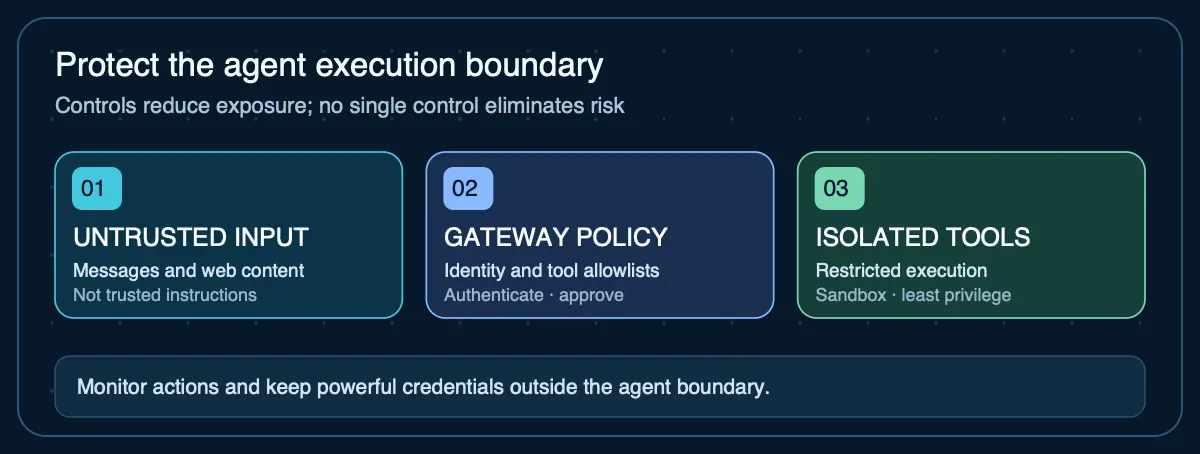
The most important architectural difference between coding agents is where they execute. A local terminal agent inherits the developer's permissions and environment. A cloud sandbox isolates execution but requires repository access configuration. A dedicated platform may manage both execution and review, trading control for convenience.
For production codebases, sandboxing directly affects blast radius. An agent that can read environment variables, write to the filesystem without boundaries, and push to remote branches has fundamentally different risk characteristics than one running in a disposable container with network restrictions.
AI Coding Agent Security and Repository Access
If the task is finding a setting in an IDE rather than changing a repository, you may only need guidance. Our comparison of Guidy with execution agents explains when an on-screen assistant fits and when code execution, sandboxing, and test evidence are essential.
An agent that can edit files and execute commands has real authority. Evaluation should include:
- Sandbox boundaries — filesystem, process, network
- Credential scoping — what secrets the agent can access
- Approval gates — whether destructive actions require human confirmation
- Audit trail — whether tool calls, decisions, and state changes are logged
- Completion evidence — whether the agent can claim success without running tests
Cost: Per-Token vs Per-Task vs Subscription
Token-based pricing makes cost proportional to task complexity and context size. Per-task pricing caps cost per unit of work but may limit retries. Seat-based subscriptions decouple cost from usage but can under- or over-provision. The relevant metric is cost per completed task, not cost per token — a cheaper model that fails and retries may cost more than a more capable one that succeeds once.
How AI Coding Agents Should Be Evaluated
Product rankings will be added after the same repository tasks are run across competing agents with the model, tool permissions, environment, test suite, completion criteria, elapsed time, and cost documented. In the meantime, the comparison framework above can structure your own evaluation against the specific tasks, codebase, and security requirements your team faces.
Sources
- OWASP Top 10 for Agentic Applications 2026— Security risks specific to agents that execute code and access tools
- Microsoft — Secure agents— Least privilege, identity, and sandboxing guidance for agent workloads
Agent Infrastructure Recommendation Kit
Structure your coding-agent evaluation
The Recommendation Kit includes a coding-agent comparison worksheet covering execution environment, security, cost model, and review workflow so you can evaluate products against your team's actual requirements.
Get the Recommendation Kit — $19